dragon
In the world of Earthsea, dragons are not mere beasts but ancient, sentient beings of immense power and cunning. They are the oldest race, speaking the Old Speech, the language of magic and creation, and they are capable of lying in it, a skill that makes them treacherous interlocutors. Their kinship is with wind and fire, and they are reluctant to fight over the sea, a fact that often gives their human adversaries a strategic advantage. The very existence of dragons is woven into the fabric of Earthsea's lore and magic, from the songs of the Dragonlords to the warnings of the wise.
Nature and Power
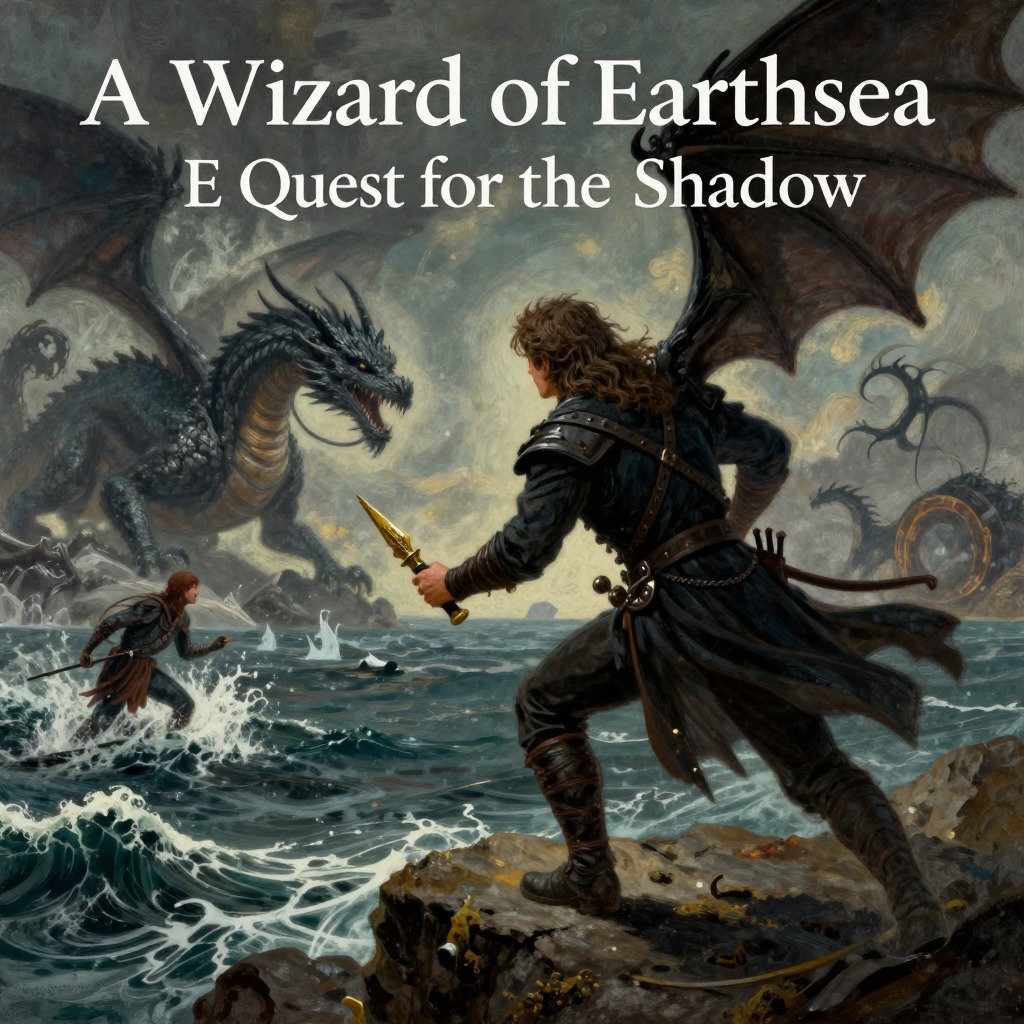
Dragons are formidable creatures, both physically and magically. The Dragon of Pendor, Yevaud, is described as "lean as a hound and huge as a hill," with scales like broken stone and a triple-tongued, spike-crowned head that rises higher than a broken tower. Their power is such that a young dragon can be the length of a forty-oared ship, and an old one can command a sorcery "like and unlike the sorcery of men." They are also deeply connected to the Old Powers of Earth, and their wisdom is ancient and often inscrutable. The Archmage Gensher himself acknowledges that dragons have their own wisdom, and that few men can guess what a dragon knows. This wisdom is not always benevolent; dragons are known to prize gold and treasure, and their hunger, though slow to wake, is hard to sate.
Ged's Encounters
Ged's first significant encounter with dragons occurs when he is sent to Low Torning as a young wizard, tasked with protecting the islanders from the dragons of Pendor. The Archmage Gensher sends him there, hoping it will be a safe place for him to gather his strength, but the threat of the dragons is real. Ged, driven by a need to confront his own inner shadow, decides to face the dragons directly. He sails to Pendor and defeats five of the young dragons with relative ease, using binding spells to hurl them into the sea. However, when the ancient Dragon of Pendor, Yevaud, appears, Ged is awed by his size and power. He realizes that he cannot defeat Yevaud through force alone. Instead, he uses his knowledge of dragon-lore, guessing that this dragon is the same one that had been driven from Osskil by a wizard named Elt, wise in names. He stakes his life on this guess and speaks the dragon's true name: "Yevaud." This act gives him power over the dragon, and he forces Yevaud to swear by his name that he and his sons will never come to the Archipelago. This bargain, struck on the edge of the sea, is a masterful display of Ged's growing wisdom, using knowledge and courage rather than brute force.
The Dragon's Offer and the Shadow
Yevaud, recognizing the power in Ged, offers to tell him the name of the shadow that hunts him, a temptation that could have saved Ged from his long and perilous quest. The dragon says, "I know what can save you. I know what alone can save you. There is a horror follows you. I will tell you its name." This offer is a profound test of Ged's character. He is tempted, but he knows that the dragon's motives are not altruistic. He realizes that "though the dragon might well be speaking truth, though he might indeed be able to tell Ged the nature and name of the shadow-thing and so give him power over it—even so, even if he spoke truth, he did so wholly for his own ends." Ged chooses to hold the dragon to his oath, prioritizing the safety of the Archipelago over his own immediate salvation. This decision demonstrates his growth from a boy obsessed with personal power to a wizard who understands the importance of duty and the balance of the world.
Dragons as Symbols and Sources of Wisdom
Throughout the story, dragons serve as symbols of the immense, untamed, and ancient powers of the world. They are not simply enemies to be slain; they are forces of nature and repositories of knowledge. The Master Namer, Kurremkarmerruk, teaches that the Old Speech, the language of dragons, is the language of magic itself. The very act of naming a dragon is an act of ultimate power and control, as Ged demonstrates with Yevaud. Later, Ged reflects on the wisdom of dragons, thinking, "where mages argue, dragons may be wise." This respect for their ancient knowledge is a key part of Ged's maturation. The final confrontation with the shadow, where Ged names it with his own name, echoes the dragon-bargain, showing that the deepest truths are often found in the most dangerous encounters. The dragons, in their ancient and alien nature, represent the ultimate other, and learning to deal with them—not through conquest but through understanding and respect—is a crucial part of becoming a true mage.